

How do you get perfect timing for entries and exits in trading? This is a question I saw from Julie on Facebook: “I can never get the timing right. I either hold too long or sell too soon and lose consistently.”

The truth is, chasing “perfect” timing is a common mistake. To get perfect entries and exits, you’d need to buy at the absolute low and sell at the absolute high, which is nearly impossible. It’s like trying to win the lottery. Instead, what really matters is your mindset and money management.
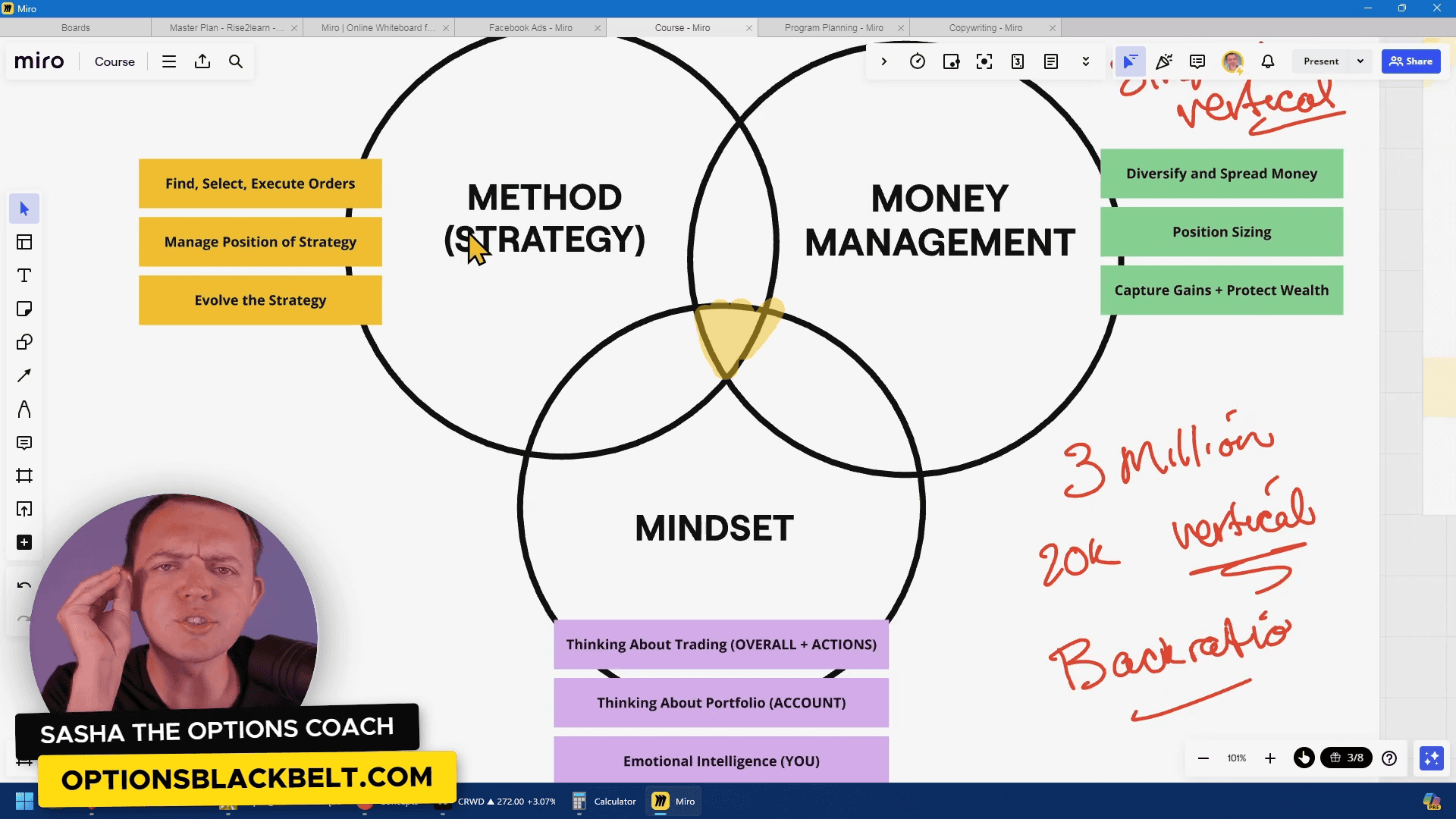
In my Options Black Belt group, we focus on three key areas: method and strategy, money management, and mindset. Most people spend too much time obsessing over strategy, but neglect the crucial part—mindset. You need to accept that you won’t hit the lowest low or the highest high consistently. The goal is to manage your risk and capital effectively.
Spread Your Risk
One way to approach this is by spreading your capital over time. Here’s an example:
Let’s say you’re selling puts to acquire shares if a stock drops. Instead of putting all your money on one trade, you spread it out. For instance, you might put on trades on July 18th, July 22nd, and July 29th, each at different strike prices and dates. This spreads out your risk over time, so you’re not reliant on hitting the perfect entry or exit point.
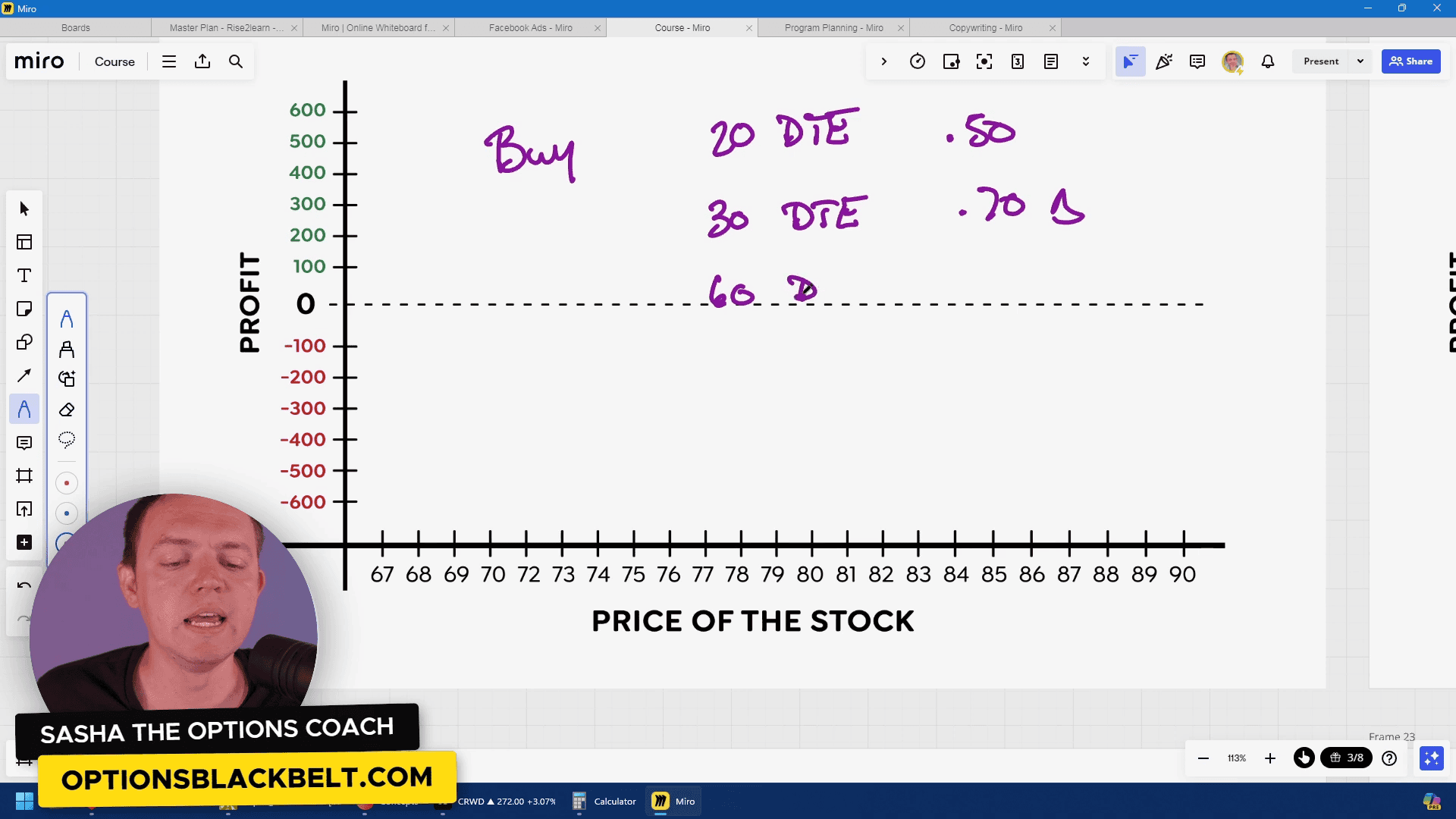
If you’re buying call options, many people make the mistake of concentrating all their risk in one spot. They might buy five contracts at one strike price and one expiration date, hoping to nail the perfect timing. Instead, it’s better to spread out your risk over different expirations and strike prices. For example:
- Buy a 50 Delta option 20 days out.
- Buy a 70 Delta option 30 days out.
- Buy a 30 Delta option 60 days out.
By spreading your positions like this, you’re reducing the risk of relying on one trade and timeframe. Each position will behave differently, and you’ll have better overall results.
The Key Takeaway
The objective is to manage your risk and spread your capital. Just as you wouldn’t put 99% of your money in one stock, don’t concentrate all your risk in one trade. Perfect timing is rare, and chasing it will leave you frustrated. Instead, focus on consistent money management and a balanced mindset.


