

Are you selling covered calls but struggling with how to structure your portfolio effectively? In this guide, I’ll walk you through my approach to portfolio allocation, specifically designed for those selling covered calls. This model will help you see how to allocate assets based on different strategies to improve your trading outcomes.
Here’s a breakdown of my portfolio model, which focuses on a triangular structure with three key zones: Long, Medium, and Speculative. This setup helps manage risk and maximize returns when trading covered calls.
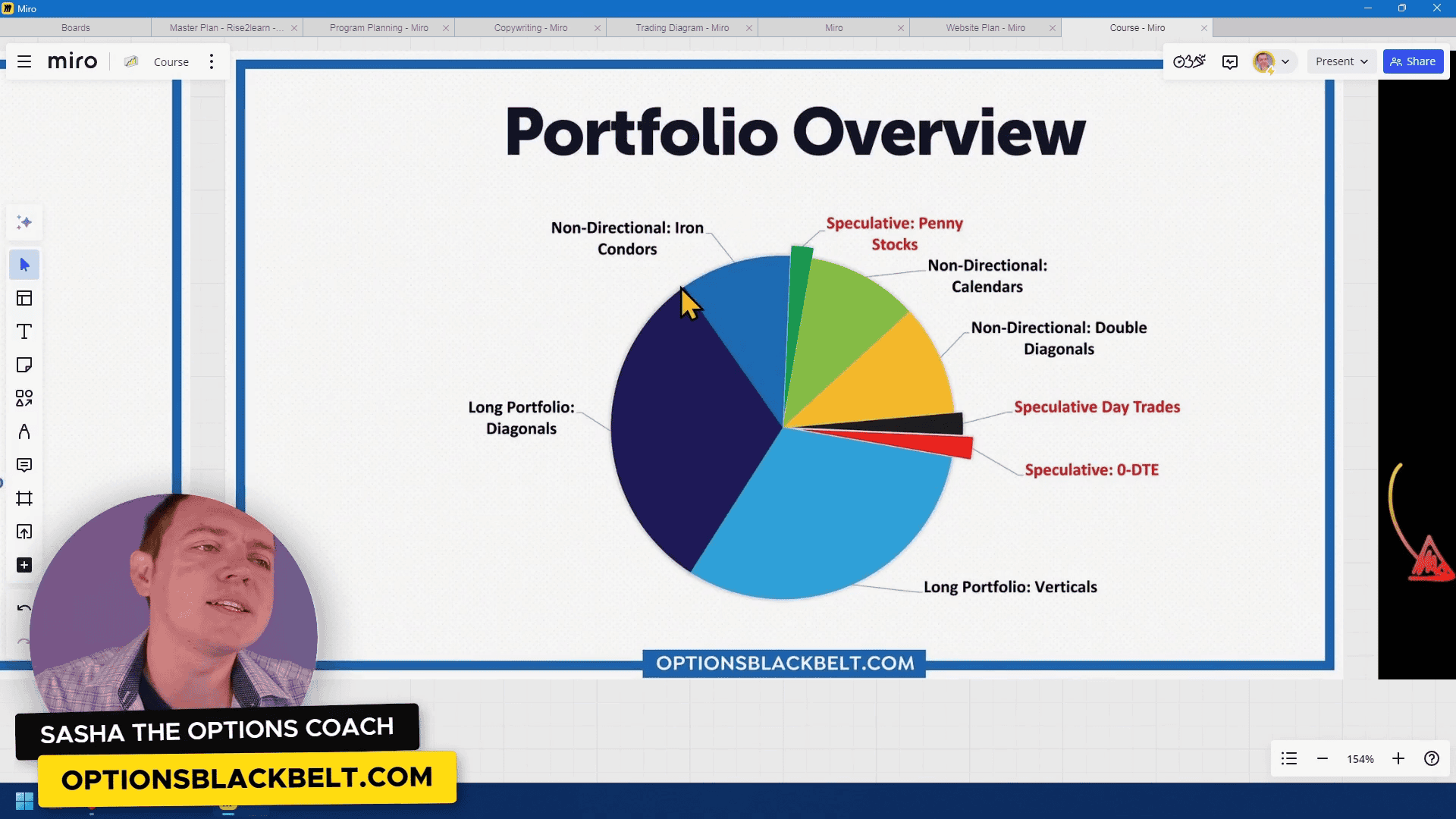
Rethinking the Traditional Pie Model
A lot of people use the classic “pie” model for portfolio allocation, dividing assets into general sections. While this might be common practice among money managers, I find it’s not as effective for covered calls. Instead, I like a triangle-based structure with three zones:
1. Long Portfolio (Positive Delta)
- Focus: Positive Delta, or long-term price appreciation.
- Trade Duration: Typically 60 days or more.
- Strike Price: Out-of-the-money (OTM) calls, allowing for greater potential appreciation.
The Long Portfolio is designed to benefit from long-term price increases, so these are lower-risk, longer-term trades with room for upward movement in stock prices.
2. Medium Portfolio (Theta-Focused)
- Focus: Income from Theta, meaning trades that benefit from time decay.
- Trade Duration: Between 30 and 60 days.
- Strike Price: Closer to at-the-money (ATM) for more consistent income.
The Medium Portfolio is ideal for stable stocks where we can collect premiums from time decay, without relying on significant price movement.
3. Speculative Portfolio (Short-Term)
- Focus: High-risk, short-term trades.
- Trade Duration: Typically 30 days or less, possibly even just a week or a single day.
- Strike Price: Often at-the-money or slightly in-the-money for quick rotation.

The Speculative Portfolio is meant for short-term opportunities and may involve trades with shorter expiration dates or frequent rotation, depending on market conditions.
Allocating Capital and Adjusting Based on Market Levels
In general, your allocation might look something like this:
- Long Portfolio: Around 50%
- Medium Portfolio: Around 30%
- Speculative Portfolio: Around 5% to 10%
- Cash Reserve: Holding cash to reinvest as needed
This model provides flexibility based on market conditions. For instance:
- At Market Highs: You might reduce your Long Portfolio to about 30% to limit exposure.
- At Market Lows: You may choose to increase your allocation in the Long Portfolio for potential gains as the market recovers.
Key Takeaway: Managing Risk with a Balanced Portfolio
This triangular model helps balance risk by spreading it across different time frames and trade types. The Long Portfolio provides stability, the Medium Portfolio generates income, and the Speculative Portfolio offers short-term opportunities. Together, they create a more flexible, balanced portfolio that adapts to changing market conditions.
If you’d like a deeper look at this model, drop me a quick note below, and I’ll send you a PDF guide with more insights and details.


