

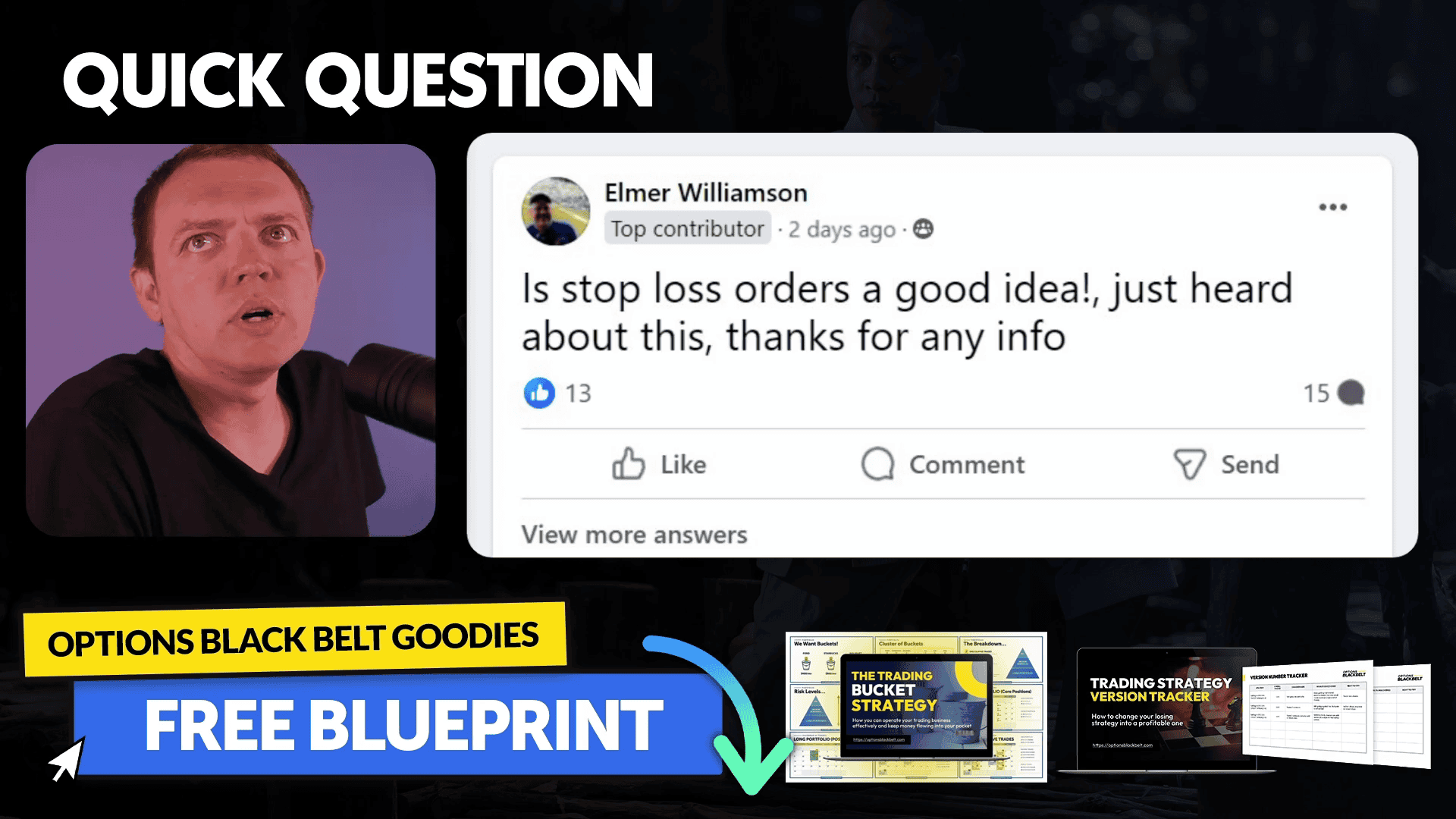
You might be thinking, “Of course I need stop-loss orders, right?” But it’s not always that simple.
When Stop-Loss Orders Make Sense:
If you’re just starting out, buying stocks, and worried about a stock dropping to zero, using a stop-loss can be a smart move. For example, if you buy a stock at $80 and it drops to $70, you might decide to stop out to preserve your capital and live to trade another day. This is especially helpful when you’re dealing with the potential of large losses.
When Stop-Loss Orders Might Not Be Necessary:
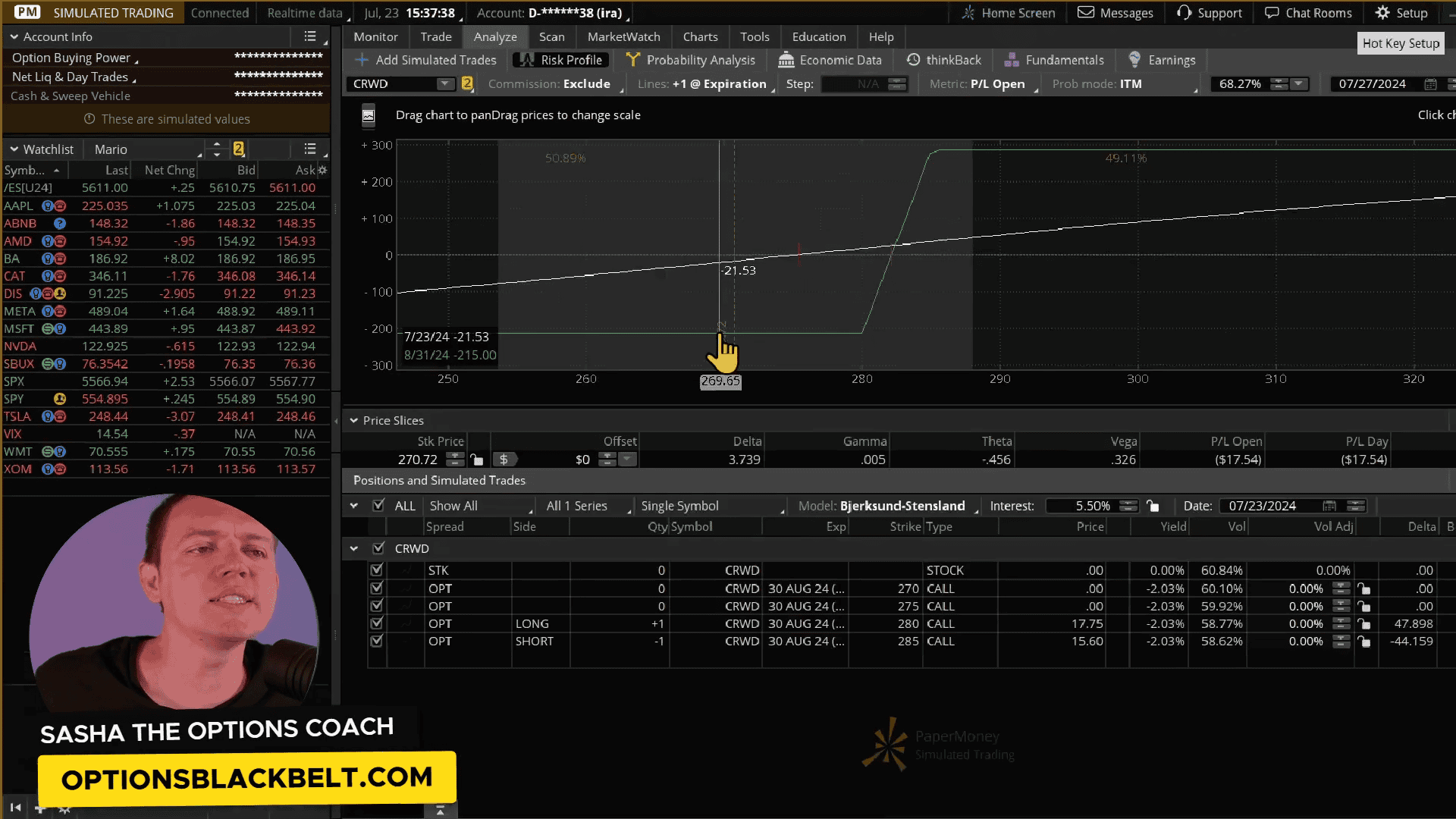
However, as your strategies become more advanced, stop-losses may not always be needed. Take vertical spreads, for example. Let’s say you’re trading a debit spread, risking $215 to potentially make $285, with 39 days until expiration. In this case, a stop-loss isn’t necessary because your risk is predefined – the most you can lose is the $215 you invested.
The same principle applies if you’re buying a single option. You already know the maximum risk upfront (say $175). If you can’t handle that risk, you probably shouldn’t be trading that option.
Why Stops Can Sometimes Backfire:
A common mistake traders make is stopping out, only for the stock to rebound right after. When you’re trading something like single options, the price may whip around a bit, making stops less effective.
Different Strategies, Different Rules:
It’s important to match your stop-loss strategy to the trade. For more straightforward investments like covered calls or dividend stocks, stops make sense. For strategies like at-the-money vertical spreads or butterflies, stops may not be necessary since the risk is capped.
In summary, stops aren’t a one-size-fits-all solution. It depends on the trade structure and risk tolerance.
Want to Dive Deeper?
In my Options Black Belt Mentoring, we cover these concepts in depth, working with you to refine your strategy day by day. Check out more on our website!
Hope this gives you some clarity. Have a great weekend, and keep trading!


